
Drivers who refuel without spending limits cost their employers more than most fleet managers realize. When there is no purchase restriction at the pump, fuel expenses creep upward through premium-grade fill-ups, off-route station stops, and non-fuel transactions that slip onto company accounts. Businesses that want to lock down those costs are turning to fleet fuel card solutions that assign spending rules directly to each card and give managers real-time visibility into every dollar spent on fuel.
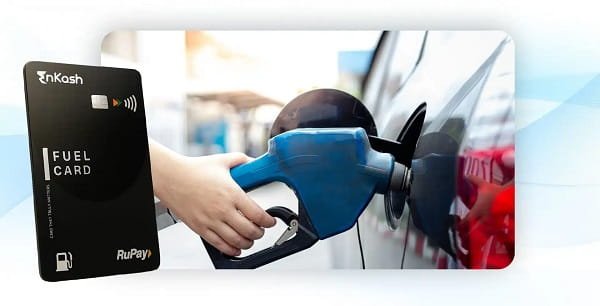
How fuel cards keep driver spending within set limits
Fuel represents roughly 49% of commercial fleet operational costs, according to data from Market Growth Reports. That single line item often outpaces insurance, maintenance, and depreciation combined for companies that depend on vehicles. Fuel cards give businesses the ability to set per-transaction limits, restrict purchase categories to fuel only, and cap daily or weekly spending for each driver individually.
A 2025 survey published in MWS Magazine found that 43% of fleet operators listed spending controls as a primary reason for choosing fuel cards over generic credit cards. The logic is straightforward: when a driver’s card only works for diesel at approved stations between certain hours, there is very little room for unauthorized charges. This level of control also reduces the back-and-forth between drivers and accounting departments. Instead of reviewing receipts and questioning charges after the fact, managers set the rules in advance and let the card enforce them at the point of sale.
The reporting advantage over traditional payment methods
Switching from a corporate credit card to a fuel card changes the depth of data a business collects on every transaction. Each fuel card purchase logs the station name, location, fuel type, gallon count, price per gallon, and total cost. Many programs also prompt drivers to enter their vehicle’s odometer reading at each fill-up, though a Visa study found that 34% of those readings are inaccurate.
Even with that margin of error, the tracking data is significantly more useful than a single line on a credit card statement. Fleet managers can pull reports by vehicle, by driver, or by time period. When one truck in a group of similar vehicles consistently burns more fuel on the same route, the reporting flags the discrepancy quickly and points toward a maintenance issue or inefficient driving habit.
According to Market Growth Reports, 47% of fuel card providers now offer analytics dashboards for real-time monitoring. That kind of access to live expense data lets managers address problems as they develop rather than discovering them during end-of-month reconciliation. The difference between reactive and proactive management often comes down to how fast the information reaches the right person.
Security features that protect against fraud and misuse
Fuel card fraud takes several forms. Drivers might share cards with friends or family, fuel personal vehicles on company accounts, or make purchases outside of approved categories. Without built-in security features, those charges blend in with legitimate transactions on a basic credit card statement.
Fleet cards address this with layered restrictions. Most programs allow managers to lock each card to a specific fuel station network or tie it to a single vehicle. Some cards flag transactions that occur at unusual hours, at stations far from the expected route, or that exceed a set gallon limit for the assigned vehicle type. These automated alerts catch problems that manual receipt reviews would miss entirely.
Shell Fleet Solutions reported that businesses using their fleet card program achieved 5% to 15% reductions in fuel costs, with a meaningful portion of those savings coming from misuse detection alone. For a business spending $50,000 per month on fuel, even a 5% reduction in waste frees up $30,000 annually for other operations.
Station network coverage and fuel discounts
A fuel card is only as useful as the stations it works at. If a card confines drivers to a small network, the convenience disappears. Drivers waste time and burn extra fuel searching for approved locations, which defeats the purpose of the management tool.
Most major programs provide access to thousands of stations across the country. Branded fuel cards (tied to specific fuel companies) held 45.9% of the U.S. fuel card market in 2024, according to Grand View Research. Universal cards that function across multiple brands made up a large share of the rest, with 38% of new cardholders in 2023 choosing multi-network options for greater flexibility.
Per-gallon discounts vary by program and volume. Typical savings range from 3 to 10 cents per gallon depending on the card. For a fleet consuming 10,000 gallons monthly, a 5-cent discount produces $6,000 in annual savings before accounting for any operational efficiency gains from better expense tracking.
Turning transaction data into operational improvements
The data fuel cards collect has value beyond monitoring expenses. When paired with route information, fuel purchase patterns reveal opportunities to optimize how a fleet runs day to day.
A vehicle that refuels more frequently than others on the same assignment might have a maintenance issue, an inefficient route, or a driver whose habits waste fuel. Transaction records create a baseline for comparison, and deviations from that baseline signal where to investigate. This kind of data-driven approach to fleet management turns routine fuel purchases into a diagnostic tool.
Telematics integration extends the benefit further. Sixty percent of new fleet vehicles ship with telematics hardware, and integration between telematics systems and fuel card platforms grew 34% year over year in 2024. Combining GPS and engine data with purchase records gives fleet managers a complete picture of how each vehicle performs, not just what it costs to keep on the road.
Where the market stands
The U.S. fuel card market reached $88.03 billion in 2024. Grand View Research projects it will grow to $148.18 billion by 2030 at a 9.4% compound annual growth rate. North America accounts for 41% of global fleet card volume with more than 10 million active cards in circulation.
Adoption rates climb with fleet size. Seventy-eight percent of businesses operating more than 50 vehicles already use fleet cards for fuel management. The remaining growth opportunity sits with smaller operations. A 2024 report from Javelin Strategy identified small fleets as the biggest untapped market, noting that providers are building simpler onboarding and lower volume thresholds to attract them.
For any business still relying on receipts or general-purpose credit cards to track fuel costs, the numbers point toward a clear upgrade. Fuel cards combine purchase control, detailed reporting, network discounts, and fraud security into a single solution that helps reduce costs while giving managers better visibility into how their fleet operates.

Anantha Nageswaran is the chief editor and writer at TheBusinessBlaze.com. He specialises in business, finance, insurance, loan investment topics. With a strong background in business-finance and a passion for demystifying complex concepts, Anantha brings a unique perspective to his writing.