
Let us be honest. Most furniture regrets do not happen after six months or one year. They start right there in the store or on the website when we fall in love with something instantly. The colour looks nice, the price feels tempting, the sales pitch sounds convincing and we think “let’s buy this”. That is where the problem begins. Furniture is not like clothes that you can change next season. One wrong decision stays with you for years, sometimes daily reminding you that this could have been avoided. These mistakes slowly eat up money, space, comfort and peace of mind. If you plan a little better at the buying stage, you save yourself from unnecessary replacements, repairs and frustration later.
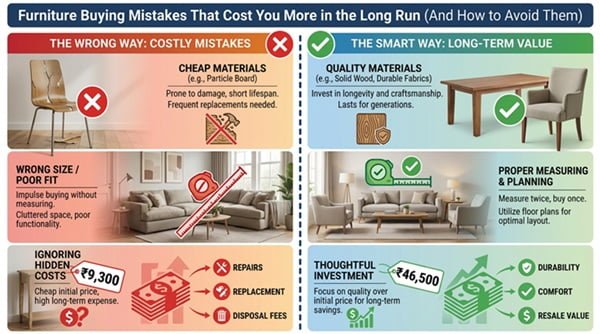
1. Choosing Price Over Quality and Falling into the False Savings Trap
This is probably the most common mistake. We see a low price tag and instantly feel smart about saving money. But furniture does not work like grocery shopping.
- Low cost furniture usually uses cheaper materials
- Weak joints and poor hardware start acting up very soon
- Finishes wear off faster than expected
Many people get confused between engineered wood and solid wood. Engineered wood is not bad, but it is not meant for everything. Using it for heavy use furniture like beds and wardrobes often leads to bending, chipping and loose fittings. Solid wood may cost more initially, but it stays strong for years.
Cheap hardware is another hidden problem. Hinges, sliders and screws decide how long furniture survives daily use. When these fail, repairs become frequent and replacements unavoidable. That initial saving quietly turns into repeated spending.
Smart move here is simple. Spend more on core pieces like beds, sofa bed and wardrobes. You can always save on decor and side tables.
2. Ignoring Space, Measurements and Layout Planning
This one hits especially hard in Indian homes where space is already limited. Buying furniture without measuring the room properly is a recipe for daily irritation.
- Oversized sofas block movement
- Beds eat up walking space
- Wardrobes clash with doors
People often forget to measure doorways, lifts and staircases. That beautiful sofa then refuses to enter the house and suddenly custom alterations cost extra.
Clearance space matters a lot.
- Space to walk comfortably
- Space for doors and drawers to open
- Space for natural light to move
Always measure twice and imagine how the room will function daily. Furniture should support movement, not fight with it. Planning layouts beforehand saves money and also saves you from selling furniture at a loss later.
3. Overlooking Comfort, Ergonomics and Daily Usage Needs
Obviously, when it comes to furniture purchasing, Looks matter, but comfort matters even more. Many homeowners end up with sofas that look really great
- Sofas without proper seat depth
- Chairs without back support
- Beds with weak support systems
Ergonomics directly affects your overall health. Poor seating can cause you back pain, neck strain and tiredness. This becomes a daily problem, not a one time inconvenience.
Furniture should match your lifestyle.
- Work from home needs supportive chairs
- Families need durable and easy to clean upholstery
- Elders need firm and stable seating
Trying furniture in person or choosing trusted brands makes a big difference. This is where stores like Wooden Street help because you can actually sit, test and understand how furniture feels before committing.
4. Neglecting Maintenance, Warranty and After Sales Support
This part is often ignored because it feels boring at the time of purchase. But later, this becomes the most important factor.
- No warranty means repair costs come from your pocket
- No service support means long waiting and frustration
- Poor return policies trap you with wrong purchases
Indian climate is tough on furniture. Humidity, heat and dust affect wood and fabric. Always check:
- Warranty duration as well as the coverage pointers
- Service availability in and around your city
- Clear return and replacement policies so that you don’t feel stuck right after purchasing
Branded furniture with high-end after sales support will bring peace of mind even after many years. Even if something goes wrong, you know help is available. That reliability saves money and stress in the long run.
5. Buying Everything at Once Without Prioritising
New homes often trigger panic buying. Curtains, sofa covers, bed, dining table, storage, decor, almost everything at once. This usually leads to budget exhaustion and compromises on choices as well.
- Buying in hurry can cause you choose poor kind of furniture
- No time to understand actual needs
- Budget finishes before essentials are covered
Furniture buying should be phased.
- Start with bed and seating
- Add storage next
- Decor comes last
Living in the space for a few weeks gives clarity. You understand traffic flow, lighting and usage patterns better. That understanding prevents unnecessary purchases.
6. How to Buy Smart and Avoid Costly Furniture Mistakes
Buying smart does not mean buying expensive. It means buying the right, as per your choices, your needs, and of course, your budget.
Before purchasing checklist
- Measure room, doors and passages
- Decide budget for each furniture type
- Understand usage frequency
- Check warranty and service
Where to invest more
- Bed and mattress
- Sofa and seating
- Wardrobes and storage
Where you can save
- Side tables
- Decor items
- Temporary furniture
Mixing modular furniture with solid wood pieces is really very practical approach. Modular works well for kitchens and storage while solid wood can work well for heavy use furniture. This balance helps you control overall cost without compromising durability.
Visiting reliable stores like Wooden Street can really help you well because you can plan-out the entire room instead of buying random pieces here and there. Their setups show how furniture looks altogether in real homes. Many buyers also return to Wooden Street later to upgrade slowly once they understand their space in a much better way.
Final Thoughts
Furniture buying mistakes costs you more than money by costing you your overall comfort, time and of course, peace of mind. Most of these mistakes actually happen when you are in a lot of hurry, as it causes emotional decisions and lack of planning. Taking a little extra time to think, measure and understand your needs changes everything.
A smart purchase stays useful for years and quietly supports daily life without demanding attention. That is the goal. Buy less, buy better and buy with clarity. And remember, good furniture should make your life easier, not constantly remind you of what went wrong.

Anantha Nageswaran is the chief editor and writer at TheBusinessBlaze.com. He specialises in business, finance, insurance, loan investment topics. With a strong background in business-finance and a passion for demystifying complex concepts, Anantha brings a unique perspective to his writing.