
This paper dissects cases of cyber-violence practiced against women, major legal safeguards, enforcement issues, as well as steps that victims can take in order to ensure cyber-security.
The online space was expected to be a place where voices could be amplified and empowered, but for women, this has become a realm of intimidation and intimidation. Online stalking, threats and violence against women have emerged as significant types of online violence. There continues to be an increase in the number of women experiencing violence online.
Cyber violence against women exists in several different forms, and often the lines between what constitutes cyber violence versus what constitutes “real world” violence are blurred. In many cases, women are more likely to experience some form of cyber crime compared to other genders due to their higher levels of online activity on social networking sites, the fact that women have been frequently targeted as crime victims, and because there is widespread use of their personal information.
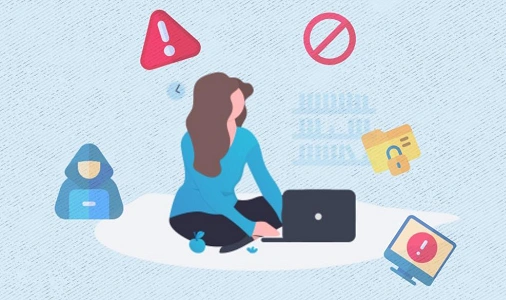
Anatomy of Digital Violence Against Women
Cyber stalking, impersonation, image-based abuse (such as sending pornographic photos), and doxing are examples of crimes based on societal bias. Cyber stalking, impersonation, and image-based abuse (such as sending pornographic photos) can often be seen as forms of retaliation/manipulation. One of the more common forms of cyber violence against women is NCII (Non-Consensual Intimate Imagery). Women are most frequently subjected to this type of violence through NCII, which refers to people who receive intimate photos or videos without their consent. While NCII has been a common type of cyber violence against women for some time, it has recently become a more significant trend due to the proliferation of AI technology.
Another growing pattern causing an increase in cyber violence against women is the emergence of deepfake technology. This new technology allows individuals to create credible but completely inaccurate versions of individuals’ images or videos. Deepfake technology has made creating and disseminating highly convincing, but false, images of individuals very simple and effortless; unfortunately, many of these images portray women’s faces in conjunction with inappropriate or obscene material. Because these images are circulated on the internet, many women feel a loss of control over their identities; once an image has circulated on the web, retrieving that image is very difficult
Being constantly harassed via the Internet, for example, via emails, text messages, and postings, is also categorized under “cyber violence.” Cyberstalking also perpetuates fear, loneliness, and anxiety for many people because of the risks that come with potential stalker situations even within the confines of one’s own home.
One of the most damaging factors of cyber stalking is the element of “Doxxing,” or the distribution and dissemination of a person’s private information (i.e., cell phone number, home address, work information, information on family members, and so on). In many cases, this information is used by the stalker as a way of attempting to physically harm the victim because the stalker can use this information as a way of intimidating the victim in the “real” world, as well as instilling fear within the victim’s mind. This is a direct reflection of the way in which the virtual world interacts with the real one.
In some instances, trolling can be done as a method of systematically harassing another person. Most individuals feel that comments on the Internet are simply a comment. For others, it becomes
Key Forms of Digital Violence
- Viewing, sharing, and threatening to share intimate images without consent (NCII).
- Manipulation performed by AI algorithms utilizing deepfakes and other synthetic media
- Cyber stalking and harassment.
- Doxing and group trolling resulting in exposure of personal information and abuse, often causing the victim to lodge a complaint regarding cyber crime.
The Legal Framework and Enforcement Gaps
Cyber harassment and group trolling to reveal one’s identity through doxing ultimately lead to exposing personal information, creating a situation where the victim needs to consult a cyber crime lawyer to properly file a report of cybercrime with the authorities
- The Information Technology Act, 2000 outlines the crimes of identity theft, impersonation on the internet, and violation of one’s right to their privacy, which encompass cybercrime.
- The Indian Penal Code also covers harassment, intimidation (criminal), defamation, obscenity, and establishes a framework so that cybercrimes can be handled simultaneously as with other criminal offenses.
- Although there is an established framework per the guidelines of the Information Technology Act, it is common for police officers to not immediately accept FIRs (First Information Reports) relating to cyber violence. Another limiting factor to the investigative process is the lack of cyber cell facilities available to conduct the initial parts of the investigation into a cyber violence case.
- Digital evidence can be difficult to obtain as it has a short shelf life. If law enforcement does not act promptly, the data may quickly become unusable or difficult to prove in court, resulting in a greater likelihood of losing the case.
- Victims of cybercrime face multiple hurdles, including complex jurisdictional structures and potential negative social stigma attached to cybercrime.
- Law enforcement agencies are often ill-equipped to deal with cybercrime due to lack of experience and/or training in digital forensics.
- The role of social media companies in removing harmful content is critical to deterring cybercriminals; however, the response time and level of cooperation of companies varies greatly from one place to another.
- Standard operating procedures (SOP) for grievance mechanisms on social media are often not well defined, providing little to no transparency for victims.
- The lack of strong standards and accountability for social media companies creates gaps between the intended outcome of the law and actual digital enforcement.
Actionable Legal Guide for Victims
When looking into the issue of cyber abuse against women, the number one priority is maintaining evidence and protecting yourself. Experts say that all women should immediately save screenshots of abuse, URLs, all messages, and any other types of evidence related to cyber violence against them.
Next, women should seek legal recourse by filing an official complaint with the appropriate authorities. Cyber crime complaint made to the police department, or through an Internet law enforcement agency. If the violent behavior persists or there were serious threats made, consulting with a cyber crime attorney would be beneficial to ensure that the complaint is filed properly according to the laws.
Further, it is also just as important for women to request that the sites host these abusive images or comments take corrective action by removing said items. Today, there are many websites and social media sites that allow accounts of abusive images, impersonation, or cyber bullying to necessarily be reported to them. Reporting must also include proper identification of the author of the report, as well as evidence supporting the allegation. Finally, serving a legal notice can help hold sites accountable for the removal of abusive material if they do not address the situation in a timely fashion.
In addition to criminal remedies, civil remedy options accompany criminal remedies and provide an additional source of protection. Civil remedies include civil injunctions (Court orders that prevent a person from changing or attempting to change their actions) and civil lawsuits that allow for recovering damages for loss of reputation; additionally, in some states, the courts may issue orders telling web intermediaries (Internet Service Providers) to remove any defamatory material.
Conclusion
Cyber violence against women is no longer a hidden or isolated issue—it is a serious legal and social challenge that demands timely action, stronger enforcement, and greater awareness. While digital platforms have expanded opportunities for expression and connection, they have also created new spaces for abuse that can deeply affect personal safety, dignity, and mental well-being.
The path forward lies in informed response and consistent legal action. By understanding available legal remedies, preserving evidence, and using reporting and takedown mechanisms effectively, victims can reclaim control over their digital presence. At the same time, stronger accountability from authorities and intermediaries is essential to ensure that laws translate into real protection. Addressing cyber violence is not just about punishment; it is about restoring confidence in the digital space and ensuring that women can participate online without fear.

Anantha Nageswaran is the chief editor and writer at TheBusinessBlaze.com. He specialises in business, finance, insurance, loan investment topics. With a strong background in business-finance and a passion for demystifying complex concepts, Anantha brings a unique perspective to his writing.