Project management as a skill is becoming increasingly important across industries and business functions. By 2026, organisations in IT, construction, healthcare, finance, manufacturing, consulting, and startups will be running multiple complex initiatives in parallel. These initiatives will operate under tight timelines, constrained budgets, and rising stakeholder expectations. Successfully delivering project objectives will no longer be optional; it will directly influence revenue growth, customer satisfaction, and long-term competitive advantage.
Because of this shift, professionals who can plan, execute, and lead projects effectively are in strong demand. Among the many credentials available, the Project Management Professional (PMP) certification is widely regarded as one of the most respected and globally recognised qualifications. This leads many professionals to ask an important question.
Is the Project Management Professional certification worth pursuing for career growth in 2026, or would other project management training programs be sufficient?
This article explores that question by examining the relevance of PMP in 2026, who should pursue it, how it compares with other project management courses, and whether it offers meaningful returns in terms of career advancement and compensation.
The Importance of Project Management Skills in 2026
Modern project managers must operate across disciplines and adapt to rapidly changing environments. Digital transformation, distributed teams, evolving regulations, and shifting customer expectations have made projects larger, faster, and more cross-functional than ever before.
Organisations rely on project managers to:
- Deliver initiatives on time and within budget
- Align stakeholders across teams and geographies
- Proactively manage risks
- Ensure business objectives are met
- Maintain accountability and execution discipline
As a result, project management is no longer viewed merely as a cost function. It has become a strategic capability and a competitive differentiator. From a career standpoint, this has significantly increased the importance of structured project management training and certifications for professionals aspiring to managerial and leadership roles.
What Is the Project Management Professional (PMP) Certificate?
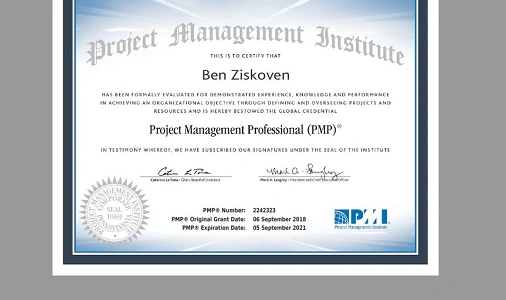
The Project Management Professional certificate is an internationally recognised credential that validates a professional’s ability to manage projects using globally accepted standards and best practices.
Unlike introductory project management courses, PMP is designed for experienced professionals who already work on real projects and lead teams or initiatives. It covers predictive, agile, and hybrid project approaches, with a strong emphasis on accountability, decision-making, and real-world application.
Holding a PMP certification signals that a professional is not only familiar with project management concepts but is capable of leading complex initiatives at an advanced level.
Who Should Consider a Project Management Professional Certificate?
PMP is not intended for absolute beginners. It is best suited for professionals with project experience who want to formalise their expertise and advance to higher-level roles.
The certification is particularly valuable for:
- Project and program managers
- IT, engineering, and operations professionals
- Product managers and delivery leads
- Consultants and client-facing managers
- Team leads who aspire to leadership roles
If you already manage projects or aim to transition into senior project leadership roles, PMP can be a significant career milestone.
Skills Gained While Preparing for PMP
Preparing for the PMP builds a comprehensive, practical skill set that extends well beyond theory. Candidates develop a strong foundation in:
- Scope, schedule, and cost management
- Resource planning
- Risk and procurement management
- Stakeholder engagement
These competencies are essential for managing large, high-impact initiatives.
PMP also reflects the reality that modern projects rarely follow a single methodology. The certification framework includes predictive approaches, agile principles, and hybrid models. This flexibility makes the Project Management Professional certificate relevant across industries and organisational contexts in 2026.
Beyond methodologies, PMP places strong emphasis on leadership and decision-making. Professionals develop the ability to:
- Lead cross-functional teams
- Manage conflicts and escalations
- Make trade-off decisions under pressure
- Align projects with broader business strategy
These leadership capabilities often distinguish senior project managers from coordinators and administrators.
PMP Compared to Other Project Management Courses
Many professionals wonder whether PMP is superior to other project management courses.
- Entry-level courses are helpful for individuals new to project roles, as they introduce fundamental concepts, terminology, and basic frameworks. However, they tend to focus on awareness rather than mastery.
- Intermediate project management courses usually cover specific tools, agile or Scrum frameworks, or role-based training. While valuable for skill development, these programs often lack the global recognition and validation of experience that PMP provides.
What sets PMP apart is its international standardisation, requirement for proven project experience, focus on real-world decision-making, and applicability across industries. For professionals targeting senior or strategic roles, PMP typically carries more weight than standalone project management training.
Career Benefits of the PMP Certification
One of the most significant benefits of PMP is enhanced professional credibility. It signals to employers that you meet global project management standards, possess hands-on experience, and understand both strategic and execution-level responsibilities. In competitive job markets, this credibility can be a decisive advantage.
PMP also opens doors to senior and global roles. Many organisations prefer or require the PMP for advanced project roles and use it as a benchmark for leadership readiness. Because it is recognised worldwide, the PMP is particularly valuable for professionals seeking international opportunities or roles at large enterprises.
In terms of compensation and growth, project management remains one of the more financially rewarding career paths. PMP-certified professionals often earn higher salaries than non-certified peers, progress faster into leadership roles, and gain access to more complex and higher-impact projects. While compensation varies by industry and region, PMP is consistently associated with stronger earning potential.
Is PMP Worth It Compared to Short-Term Project Management Courses?
The value of PMP depends mainly on your career stage. For those new to project management, introductory courses may be sufficient to build a foundation. However, for professionals already leading projects and aiming for senior or strategic positions, PMP offers long-term value that short-term courses cannot match.
Many professionals follow a progressive learning path, beginning with foundational project management training, gaining practical experience, and later pursuing the Project Management Professional certificate to formalise and elevate their expertise.
What It Takes to Earn PMP
PMP requires commitment, which is part of its value. Preparation involves a deep understanding of project management frameworks, practising scenario-based decision-making, and aligning theoretical knowledge with real-world project experience.
With a structured study plan, most working professionals can successfully prepare for and earn the certification.
Common Myths About PMP
There are several misconceptions surrounding PMP:
- It is not limited to IT professionals and applies across industries
- It is not outdated, as it now incorporates agile and hybrid practices
- PMP does not guarantee employment, but it significantly strengthens a professional profile when combined with experience
How PMP Complements Other Project Management Learning
PMP builds on prior learning rather than replacing it. Many professionals begin with introductory project management courses, transition to agile or Scrum frameworks, gain project management experience, and then pursue the PMP. This layered approach maximises skill depth and long-term career impact.
Is the Project Management Professional Certificate Worth It in 2026?
For the right professional, the answer is yes. PMP is particularly valuable if you:
- Already manage or lead projects
- Aim for senior or leadership roles
- Seek global recognition
- Want sustained career growth rather than short-term skill acquisition
If you are early in your career, starting with foundational project management training may be a better first step.
Final Thoughts: PMP as a Career Investment
The Project Management Professional certificate is more than a credential. It represents professional maturity and signals your ability to lead, make informed decisions, and deliver results in complex environments.
In 2026, the most successful project professionals will combine experience with structured knowledge, apply both agile and traditional methodologies effectively, align projects with business objectives, and continuously develop leadership capabilities. By complementing your experience with the right project management courses and earning your PMP at the appropriate stage, you position yourself for a resilient, respected, and high-impact career in project leadership.

Anantha Nageswaran is the chief editor and writer at TheBusinessBlaze.com. He specialises in business, finance, insurance, loan investment topics. With a strong background in business-finance and a passion for demystifying complex concepts, Anantha brings a unique perspective to his writing.