
Do workplace hazards discriminate by gender? Two workers, a man and a woman, working in a factory on the same machine, will the hazard be different for both? Then why are safety shoes for men and women marketed differently?
Foot protection is a basic requirement when people work on rough terrain, in hazardous surroundings, and around heavy/sharp objects and machinery. Safety shoes for men and women are the most common personal protective equipment that help prevent workers from serious hazards such as crushing of toes due to impact, puncture of feet due to sharp nails, etc., body injuries due to slipping and tripping over oily or uneven surfaces, chemical burns, cuts due to sharp object exposure and so on. Even the best safety shoes for men and women in the industry are classified based on gender. Why is this so? Let’s see.
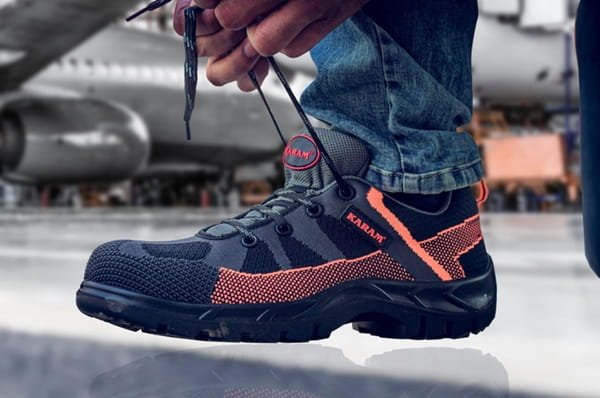
Why Is This Personal Safety Equipment Sold as Men’s or Women’s?
Safety shoes on the market are categorised as ‘safety shoes for men’ and ‘safety shoes for women’. Often, hazard is not the key differentiator in shoe categorisation; instead, construction and design are.
1. Anatomical Differences in Safety Shoes for Men and Women
- A woman’s foot is not simply a smaller version of a man’s foot. Key anatomical differences include:
- Heel-to-Ball Proportion: Women typically have a narrower heel relative to the forefoot, meaning standard unisex or men’s shoes can cause heel slipping and friction blisters.
- Arch and Instep Shape: Differences in arch curvature and instep height require dedicated shoe lasts to provide proper posture support and reduce fatigue.
- Sizing Systems: Standard conversion scales differ between men’s and women’s footwear across standard sizing charts.
2. Different Design and Aesthetics of Safety Shoes
- While styling never compromises protective capability, manufacturers often tailor profiles, color options, and upper cuts based on customer feedback and demographic preferences for safety shoes.
Safety Shoes for Men and Women: What Changes and What Remains the Same
1. What Changes
Specifications related to size, look and feel, and fit tend to change by gender.
- Fit
Because of anatomical differences between men’s and women’s feet, the fit of safety shoes differs between men and women.
- Size
Differences in foot length between men and women lead to size variations.
- Design
The design and aesthetics of safety shoes for men and women also differ (though not always) based on feedback received.
2. What Does Not Change
Because hazards do not differ by gender, safety features do not change by gender, as the surroundings and working conditions remain the same for both.
- Toe Protection
The toe protection in the safety shoes is inserted as is and indicates no change in safety measures, certifications, tests, or comfort for the user.
- Slip Resistance
The slip-resistance coefficient in the safety shoes for men and women remains the same for both.
- Puncture Resistance
Safety from penetration by any sharp objects in the shoes is possible for both men and women working at the same place; thus, this safety feature also does not change.
- Sole/ Material
Safety shoes for men and women are designed based on potential hazards. The sole and overall material do not change based on gender.
- Certifications
Certifications for even the best safety shoes for men and women are based on hazard, not gender.
- Workplace Specific Protection
Different workplaces have different working conditions; some may require protection from abrasions, some from fuel oil contact, sometimes you may need safety shoes for thermal resistance, and sometimes you may need it all in one shoe. So, as the hazards change, you need to change your shoes, focusing primarily on the safety specifications.
Can Women Wear Men’s Work Shoes?
Of course! As we discussed above, the safety shoes for men and women differ only based on size and fit. So, if your size and fit are available in men’s safety shoes (as marketed), you can choose the same.
Disclaimer: These are general suggestions; the buyer must review the complete safety and general features to their satisfaction before buying safety shoes or any other PPE.
How KARAM Safety Improved the Experience of Wearing Work Shoes
One major issue with personal protective equipment was ‘missing comfort’. It may seem like a small issue, but it has major impacts on people’s lives. KARAM Safety understood this challenge and found that it has direct consequences, including unfortunate industrial accidents and, at times, lost lives.
It emphasised that safety can only be achieved if personal protective equipment is comfortable to wear, because even slight discomfort in critical working conditions may lead to obstruction. This leads to reluctance to wear PPE, and workers ultimately tend to work in compromised safety conditions.
Today, KARAM Safety is India’s largest PPE manufacturer, providing genuine safety equipment. Its NABL-certified lab and self-sustained, world-class, vertically integrated unit ensure people wear the best in safety and comfort. It is also the largest Indian manufacturer for international brands like Black+Decker and DeWalt. Its e-commerce platform, KARAM Online, also offers stylish, lightweight safety shoes for men and women right to your doorstep.
Bottomline
Next time you see safety shoes marketed as ‘safety shoes for men’ or ‘ safety shoes for women’, do check for size, fit and design, but what you should look primarily for are the features ensuring your safety from hazards, because it’s all about what feels safe and comfortable to you.

Anantha Nageswaran is the chief editor and writer at TheBusinessBlaze.com. He specialises in business, finance, insurance, loan investment topics. With a strong background in business-finance and a passion for demystifying complex concepts, Anantha brings a unique perspective to his writing.